The Odds of When You’ll Kick It

WhenIWillDie

Here’s a website that could depress you or elate you depending on your perspective. It calculates your odds for living a certain number of years based on your gender and current age. According to the odds I’m very likely more than halfway through my life (glass half empty) but I’m also more than likely to make it at least another 30 years (glass half full).

Here’s an observation: the older you are the less likely you are to see the glass half full.

Donation As Investment

Sasha Dichter has written a great post about why it is NOT bad for nonprofits to pay decent salaries for talented, hard working people or to invest in new technologies:

…we find ourselves having the same conversation, one that boils down to: is it a wasteful to pay nonprofit professionals to do their jobs well?

I wonder if it is we in the nonprofit space who need more guts when we take on this question. Maybe it’s time to say something along the lines of, “if you want your money to go directly into the hands of very poor people who need it, you should do just that and give to Give Directly.” GiveDirectly is optimized for this, they are efficient and transparent in their operations, they rigorously study their results, and they’ve shown the effectiveness of direct cash transfers for creating both short- and long-term improvements in people’s lives. It’s a completely legitimate way to help others, and it’s a great benchmark against which to measure our work.

“Or,” we should have the courage to continue, “you can have the point of view that the programmatic work that we’re doing is better than giving cash.” “Better” can be because it does different things (fights corruption); “better” can be because the impact of giving a dollar is more than $1 (investing in a scalable social business); “better” can be because of long-term return on investing that’s higher than the social return on giving cash (supporting a child’s education).

“But,” we should be sure to say, “if you believe that the IT that we do matters, if you believe that there is something real that we are bringing to the table that goes above and beyond your money ending up in the hands of someone who will benefit from it, then you’re saying that our judgment, our relationships, our expertise, our capacity for oversight, and our ability to create leverage for each dollar you give is real. This means that you trust this judgement and our expertise. So please give in a way that respects that judgment and expertise, or don’t give at all.”

He references a TED talk on the same subject that’s an essential watch for anyone interested in how we can make sure the nonprofit sector can deliver the goods and services that are increasingly in demand. Here’s a link to it and I highly recommend you watch it.

While I do work for a nonprofit, it’s a trade association so it truly feels much more like a business. Our members pay dues and we provide services and products to help their companies and industry at large succeed. Basically our members see us as more of a business and while we do sometimes have to defend our compensation it isn’t viewed as morally wrong for our staff members to be paid a decent wage. On the other hand the “feel good” nonprofits that are addressing a social need, like the food bank I often volunteer with, often are judged harshly if they pay a competitive wage because every dollar they spend on compensation is seen as a dollar not spent on food.

As Dichter points out this is faulty logic. If you pay a competitive wage and invest in good tools then you can attract and retain talented, dedicated people who, properly armed, can work magic with those dollars and generate a return that is many times greater than the dollar given. Take the food bank example – would you rather go to the store and spend a dollar that would buy one can of soup on sale, or donate it to an organization that could turn it into seven full meals? That’s the kind of thing that well run nonprofits can do.

This isn’t to say that nonprofits shouldn’t be monitored and evaluated to make sure they’re providing the best possible service for the communities they serve. It is to say that if a nonprofit is delivering the goods, so to speak, that there is nothing inherently wrong with the people doing the good work making a decent living or with them being provided adequate tools to do their jobs.

Anyone who has spent time volunteering with a social nonprofit has likely seen the effects that poor pay and lack of capital investment can have on an organization. People who spend 80 hours a week doing something they truly believe in, but are hamstrung because they’re using outdated technology that was likely donated, and barely make enough money to keep food on their own tables, much less save money for retirement or their kids’ college education, tend to burnout and that leads to turnover. Turnover leads to increased hiring expenses and a loss of expertise that puts even more pressure on the staff and volunteers who are left to do the work, which leads to more turnover, and so on, and so on, and so on.

Please, the next time you hear someone criticize the pay of a nonprofit staff, or question the wisdom of buying a new computer, tablet, truck, etc. please try put it in perspective by looking at the big picture. If the organization is barely serving anyone while the senior executive is tooling around in a new Mercedes leased by the organization, then by all means ask a lot of hard questions. But if the organization is meeting a community’s needs, if it’s returning multiple dollars of service for every dollar donated, then support their efforts and find a way to help them do even more.

9/11 Memorial Stair Climb – First Leg of Pentathlon of Pain

My buddy Bert Wray was kind enough to set me up to participate in the 9/11 Memorial Stair Climb that he helps put on at Proehlific Park in Greensboro. 110 sets of stairs (up and down = 1) and if you’re so inclined you can carry a fire hose while doing it. I did the 110, the last 10 with the hose. Great time and a great way to commemorate 9/11, raise money for the Wounded Warrior Project and for me to start my campaign for Second Harvest Food Bank of NWNC. FYI, Bert and his crew raised hundreds of dollars for the Wounded Warrior Project!

Here’s a link to the GoFundMe page I set up for the Pentathlon of Pain:
Donate Here!

Here’s a few videos that Bert shot while I was torturing myself:

Cool Recognition for Some Greensboro Folks

The excerpt below is from a press release from Gov. McCrory’s office announcing the 2016 North Carolina Heritage Award winners. Many folks in Greensboro are familiar with the Montagnard community, but it’s probably a safe bet that folks outside of Greensboro would be surprised to learn about how large the community actually is. I need to make a note to myself to try and see some of the work of the award recipients – it really looks stunning.

H Jue Nie and H Ngach Rahlan

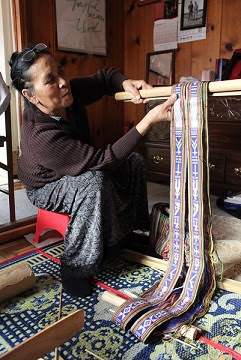
Calling themselves Dega, more Vietnamese Montagnards settled in North Carolina than in any other state, due to their fellowship with Special Forces units during the Vietnam War. Dega weavers H Jue Nie and H Ngach Rahlan of Greensboro mastered the ancient spinning, dying and weaving traditions of their people while growing up in the central highlands of Vietnam. Once a part of every highland woman’s knowledge and practice, women wove to clothe their families, decorate homes and altars, and to keep everyone warm at night. Originally Montagnard weavers grew their own cotton, spun their thread by hand, and used dyes from the indigo plant and other natural sources. Decorative elements such as beads were once made from plant materials that grew in their rice fields. War and displacement has reduced the numbers of skilled weavers remaining in Vietnam. H Jue Nie and H Ngach Rahlan moved to Greensboro 20 years ago, bringing their backstrap looms and an immeasurable knowledge of the designs and techniques that make their weaving traditions unique.

Explore the work:

Montagnard Weaving: The Women
Backstrap Weavers

Montagnard Weaving: Overview
Backstrap Weavers

Montagnard Weaving: BacksStrap Loom
Backstrap Weavers

The Problem With “Friends”

I have lots of “friends” online. These are folks who I may or may not know in the real world, but I tend to see a lot of them online in places like Facebook, Twitter, Instagram, etc. What I’m finding is that my “friends” who have pretty hard set political views tend to share the same kind of stuff, whether they’re liberal or conservative. If I were to put them in the same room together they would all probably be civil, get their views across in a relatively sane and measured way and then afterwards in the safety of their own environs they’d point out the idiocy of the other in a prototypical, Southern, bless-his-heart kind of way.

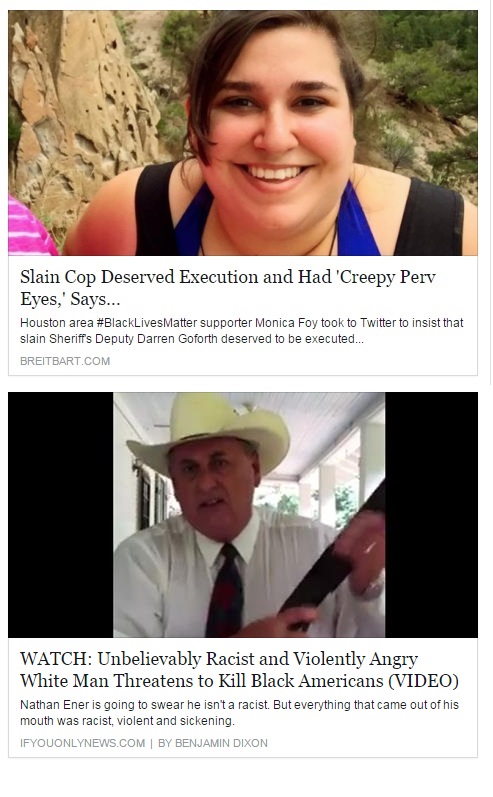
However, those same people have no problem sharing the most banal and inflammatory crap put out by “infurianators” on an almost hourly basis. Below is a picture of two “shares” that literally showed up on my Facebook timeline in order, one from a liberal and the other from a conservative. I deleted the friend info to keep the names off a public post, but believe me the items are legit. I get tired just thinking about the crap that’s gonna show up online until the 16 election, which thankfully is just a short 14 months away.

FBJuxta

And you should see the comments under these things. Believe me when I say that both conservatives and liberals are prolific in their hyperbolic outrage.

My Pentathlon of Pain for Second Harvest Food Bank of NWNC

JonTutuHeels
I’ve been talking about this for a while, but now I’ve finally decided to pull the trigger. From 9/11/15 to 10/11/15 I’m going to engage in what I’ve dubbed Jon’s Pentathlon of Pain to raise money and awareness for Second Harvest Food Bank of NWNC. What exactly is it? Actually it’s pretty simple: it’s five physically trying or embarrassing activities that I will undertake to raise money on behalf of the food bank. Here’s how it will work:

  • Someone sponsors me for a certain amount of money and they get to pick the embarrassing or physically challenging thing I will do. For example I jumped in a pool last year wearing a tiara, tutu and high heals and with a slogan painted on my back. In exchange the Blue Ridge Companies gave hundreds of dollars to Second Harvest.
  • Another option is that I will do something trying and people will donate to the food bank after I complete the task. So if I run 15 miles then they’ll donate a dollar a mile – that kind of thing.

So how can you help? Well I’ve already signed up to do the 9/11 World Trade Center memorial stair climb. That’s 110 flights of stairs I will climb and descend on the morning of the 11th. You could agree to donate a certain amount per flight if you’d like. Or you can suggest an activity and have your company sponsor it. I’ll gladly promote your company in the process and every single dollar will go to Second Harvest.

If you want to simply make a donation just visit GoFundMe page I set up for the campaign. Or check out the schedule below and if you see an available slot and you have something crazy or challenging for me to do, then just reach out and see what we can work out!

Schedule of Events

  1. Sep 11, 2015: World Trade Center Memorial Stair climb – I’m gonna climb 100 stories!
  2. Sep 26, 2015: Salem Lake 30K Trail Race – I’ve never run more than 13.1 before and I have NOT been training beyond my normal routine so this is gonna hurt.
  3. To Be Determined. You can submit a proposal via email here.
  4. To Be Determined. You can submit a proposal via email here.
  5. To Be Determined. You can submit a proposal via email here.

Living in a World of Red Herrings

Every time we have another gun-related tragedy in the United States, like yesterday’s killing of a reporter and her cameraman live on air during a morning news broadcast, we are all fed a predictable diet of red herrings. It’s tiresome and, worse, prevents us from even starting to address the problem. For those of you not from these parts here’s how things currently work:

  1. On a daily basis some Americans die of gunshot wounds for a variety of reasons, but on a fairly regular basis multiple people are killed in such a way that it makes the news.
  2. Before the gun smoke has even dissipated people in favor of gun control cite the story as a prime example of why we need <fill in the blank gun control proposal>.
  3. At the same time gun rights advocates invoke the mental health argument, i.e. “The shooter was mentally ill, and if he didn’t have a gun he would have found another way to kill him”, or the “if the victims were armed they could have killed the attacker” argument, or the “gun control only takes the guns out of the hands of honest citizens since criminals would still find a way to get them” argument, or some combination of all three.
  4. Everybody argues about it for a couple of days.
  5. We move on.
  6. The next tragedy happens.

Quite frankly both groups are right and wrong. They’re also being manipulated by various constituencies – the most obvious being the NRA – in those groups’ attempts to avoid any kind of rational approach to dealing with what everyone agrees is a national problem yet might require them to make some kind of compromise from their entrenched positions.

Since people can’t seem to be rational about this issue, and since I’ve long since grown tired arguing about it, I’m starting to take the following approach when people bring it up to me:

If a gun rights advocate uses the “he was mentally ill and would have found a way to kill them” argument I simply ask: “Given the choice of being confronted with a nut-case armed with a gun or knife (or hammer, or crossbow, or bottle full of acid, etc.) which would you prefer?” If any of them answer “gun” then I stop talking to them because they either aren’t interested in having a rational discussion or they shouldn’t be allowed to walk without a helmet.

If a gun control advocate invokes an “it’s all about the guns” arguments then I ask, “If confronted by a mentally deranged man armed with a handgun would you rather have a gun or a knife (or hammer, or crossbow, or bottle full of acid, etc.) to defend yourself?” If they answer anything but a gun then I react the same way I do to the answer from the gun rights advocate.

My purpose in asking these kinds of questions is to try and move the discussion away from the red herrings thrown out there by the gun rights/control advocates and toward a discussion about how we might take a rational, comprehensive approach to solving a very serious societal problem. Of course that won’t work with those who firmly believe that ONLY gun control or ONLY absolute gun ownership rights are the solution, but those folks could never be part of the solution anyway. The people who can and should come up with a solution are those who believe the answer is somewhere in between.

Top 25 Letdown

The Wall Street Journal recently had an interesting item about the win-loss records of the football coaches in all the major conferences against AP top-25 teams. Here’s the current ACC coaches’ records:

School Coach W-L Career W-L Current
Boston College Steve Addazio 1-6 1-4
Clemson Dabo Swinney 9-18 9-18
Duke David Cutcliffe 9-26 3-14
Florida State Jimbo Fisher 12-6 12-6
Georgia Tech Paul Johnson 10-22 10-13
Louisville Bobby Petrino 14-19 4-7
Miami (FL) Al Golden 3-13 3-8
NC State Dave Doeren 1-4 0-3
North Carolina Larry Fedora 3-9 1-5
Pittsburgh Pat Narduzzi 0-0 0-0
Syracuse Scott Shafer 0-7 0-7
Virginia Mike London 4-9 4-9
Virginia Tech Frank Beamer 45-50-1 45-50-1
Wake Forest Dave Clawson 1-9 0-2

Add it all up and these guys have won 39% of their games against Top 25 teams while coaching at their respective schools (the current number above), which is only nominally better than the 36% collective career average. Why’s that important? Because many of these coaches came from head coaching positions at smaller schools and you would expect them to have more losses there since they would have been homecoming/early season fodder for larger football schools. You would think that once they got to the larger schools their records would have improved with access to more resources, but that doesn’t appear to be the case.

Of course you can also look at it this way: it takes time to build a winning program and in today’s “win now” culture these guys just don’t get the time to lay the groundwork needed to have a strong sustainable program. That’s why Virginia Tech stands out. Beamer might have a sub-.500 record, but he’s had almost 100 games against Top 25 teams which indicates that they don’t run away from a tough schedule and they also give their coach plenty of opportunities to build and rebuild.

Love it or hate it, the reality is that college football is big business on college campuses and the head coaches are among the highest paid people on campus. And to be clear the ACC isn’t the only conference with coaches with numbers like these – the vast majority of coaches have losing records against Top 25 teams – so you have to wonder how so many keep their jobs right? That’s why we have the FCS which is chock full of teams from smaller football programs willing to take a beating in exchange for some cash. Everyone wins – the big schools get two or three almost-guaranteed wins a year, the coaches get to pad their records and the small schools get their biggest paydays of the season before playing their peers. It’s the American way.

The Make Me Barf League

This might be the single most nauseating thing I’ve seen in recent memory. It’s a Business Insider story about something called The League and as I read it I kept trying to find the “Parody” sign, both for the story’s subject matter and writing that’s so bad you want to believe it’s purposeful. Sadly, I suspect it’s real. Here’s a taste:

The League, a selective dating app for successful people, launched in San Francisco earlier this year, and a few months ago it launched in New York City.

Stanford graduate Amanda Bradford founded The League and raised $2.1 million to match up highly motivated and interesting single professionals.

The League founder Amanda Bradford, pic from Business Insider

On July 31, The League held a party out in Montauk, exclusively for its selective group of New York users. Actress Mischa Barton was among the party’s attendees…

The attendees had a lot in common — good schools, similar jobs — so conversation came easy for them…

During the first hour of the party, League guests were given an open bar. This undoubtedly made people loosen up…

So what does it take to get into The League? Its users often hold degrees from prestigious schools

To get in, The League uses a secret algorithm that looks at both your LinkedIn profile and your network of friends.

Secret algorithm? Good Lord, all you have to do is check out the article and its accompanying pics to figure out that the service’s secret sauce is based on a time-tested recipe concocted eons ago by a bunch of teenagers. I suspect the algorithm involves a bunch of perfectly coiffed folks sifting through profile pics and saying, “She’s, like, hideous. Oh, he’s dee-lish. OMG, look at that hair!”

I wish I could find something redeeming here, but honest to God it makes me want to move to a desert island.