Category Archives: Writing

Is Goodly Grammar Really Necessary?

There, their, they're,  do we really need to lose sleep over bad spelling? According to this article that appeared in Wired earlier this year, absolutely not:

So who shud tell us how to spel? Ourselves. Language is not static—or constantly degenerating, as many claim. It is ever evolving, and spelling evolves, too, as we create new words, styles, and guidelines (rules governing use of the semicolon date to the 18th century, meaning they’re a more recent innovation than the steam engine). The most widely used American word in the world, OK, was invented during the age of the telegraph because it was concise. No one considers it, or abbreviations like ASAP and IOU, a sign of corruption. More recent textisms signal a similarly creative, bottom-up play with language: “won” becomes “1,” “later” becomes “l8r.” After all, new technology creates new inertia for change: The apostrophe requires an additional step on an iPhone, so we send text messages using “your” (or “UR”) instead of “you’re.” And it doesn’t matter—the messagee will still understand our message.

Standardized spelling enables readers to understand writing, to aid communication and ensure clarity. Period. There is no additional reason, other than snobbery, for spelling rules. Computers, smartphones, and tablets are speeding the adoption of more casual forms of communication—texting is closer to speech than letter writing. But the distinction between the oral and the written is only going to become more blurry, and the future isn’t autocorrect, it’s Siri. We need a new set of tools that recognize more variations instead of rigidly enforcing outdated dogma. Let’s make our own rules. It’s not like the English language has many good ones anyway.

This dude begs to differ:

If you think an apostrophe was one of the 12 disciples of Jesus, you will never work for me. If you think a semicolon is a regular colon with an identity crisis, I will not hire you. If you scatter commas into a sentence with all the discrimination of a shotgun, you might make it to the foyer before we politely escort you from the building.

Some might call my approach to grammar extreme, but I prefer Lynne Truss's more cuddly phraseology: I am a grammar "stickler." And, like Truss — author of Eats, Shoots & Leaves — I have a "zero tolerance approach" to grammar mistakes that make people look stupid…

But grammar is relevant for all companies. Yes, language is constantly changing, but that doesn't make grammar unimportant. Good grammar is credibility, especially on the internet. In blog posts, on Facebook statuses, in e-mails, and on company websites, your words are all you have. They are a projection of you in your physical absence. And, for better or worse, people judge you if you can't tell the difference between their, there, and they're.

Good points, but for how long? For those of us who entered the working world pre-fax machine we can remember how many edits a simple letter went through before it was ever printed and dispersed. People were hired specifically to write all manner of correspondence on behalf of the rest of the company so that the egregious spelling and grammatical construction of the average worker would never see the desk of a customer or prospect.   Then email happened and after a short period of hand wringing over the advisability of poor grammarians being allowed to communicate in writing, with anyone, the floodgates opened and all manner of crappy language started flying back and forth. 'Lo and behold we all discovered we'd rather hear sooner and directly from the source, even if they think there is their, rather than wait for an expertly written reply from an intermediary. Then instant messaging happened and we realized we weren't even particular about vowels as long as we could discern the meaning of what was being written.

Of course this is all situational. If you're selling me copywriting services then you damn well better know when to use "whom," but if you're installing my high end surround sound I really couldn't give a tinker's damn if you're illiterate as long as my ear drums are blown out when I watch Glee. Or whatever.

No Man is an Island

Thanks to this year's presidential campaign there's been a rather intense discussion on how much the "self made" success stories in this country owe to help from others. Without getting into the politics of the day it's still interesting to read how some people view their own success, and it's also a great opportunity to share these views with kids who are just getting started on their own journey. In that vein is this essay from writer John Scalzi:

My parents’ marriage did not last particularly long and in the early seventies — and off and on for the next several years — my mother found herself in the position of having to rely on the social net of welfare and food stamps to make sure that when she couldn’t find work (or alternately, could find it but it didn’t pay enough), she was able to feed her children and herself. Once again, I owe thanks to America’s taxpayers for making sure I had enough to eat at various times when I was a child.

Not having to wonder how I was going to eat meant my attention could be given to other things, like reading wonderful books. As a child, many of the books I read and loved came from the local libraries where I lived. I can still remember going into a library for the first time and being amazed — utterly amazed — that I could read any book I wanted and that I could even take some of them home, as long as I promised to give each of them back in time. I learned my love of science and story in libraries. I know now that each of those libraries were paid for by the people who lived in the cities the libraries were in, and sometimes by the states they were in as well. I owe the taxpayers of each for the love of books and words…

I know what I have been given and what I have taken. I know to whom I owe. I know that what work I have done and what I have achieved doesn’t exist in a vacuum or outside of a larger context, or without the work and investment of other people, both within the immediate scope of my life and outside of it. I like the idea that I pay it forward, both with the people I can help personally and with those who will never know that some small portion of their own hopefully good fortune is made possible by me.

So much of how their lives will be depends on them, of course, just as so much of how my life is has depended on my own actions. We all have to be the primary actors in our own lives. But so much of their lives will depend on others, too, people near and far. We all have to ask ourselves what role we play in the lives of others — in the lives of loved ones, in the lives of our community, in the life of our nation and in the life of our world. I know my own answer for this. It echoes the answer of those before me, who helped to get me where I am.


The Importance of Copy Editors

Copy editors are important. Don't believe it? The folks at Groupon and Mitt Romney's campaign would probably disagree with you right about now.

GrouponDeal
Groupon's daily email today featured the subject line, "Father's Day deals for the man who gave birth to you" and linked to a page with the header, "Celebrate the Man Who Gave Birth to You." Your mother would likely be shocked to learn that your father gave birth to you. She'd also likely wonder what caused her so much pain those many years ago. Sure these headlines are better than "Celebrate your sperm donor" but they're still woefully inaccurate.

Abetteramercia

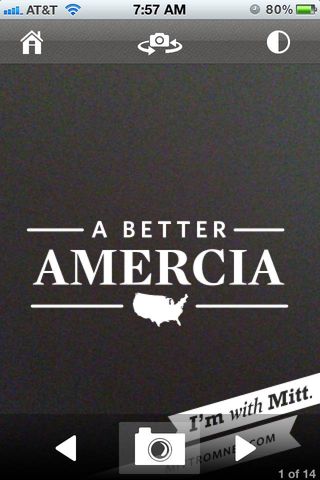
Then there's the Romney campaign's photo application that lets you take pictures of various things and then overlay a pro-Romney message on them. One problem: the message that was supposed to read "A Better America" instead reads "A Better Amercia." Granted it's not really a scandalous development for the campaign, but when you're fronting the party that's become known for being led by anti-intellectuals (Sarah Palin anyone) it's not the kind of message you want to send.

There are plenty of good copy editors out there, and given what's happened to the publishing industry of late they probably come pretty cheap. Maybe Groupon and Romney's communication team should look them up. 

Side note: If you read more than one sentence of the thousands written for this blog it will become painfully obvious that this is a highly ironic post. A copy editor's "red pen" has never graced these pages and it shows.

Finding Your Voice

Fred Wilson is definitely a top-shelf business blogger, if not the best. He started his blog AVC when he was 42, and he does a great job in this post in explaining how it helped him find his voice for the first time (and how his wife's blog did the same for her). An excerpt is provided below, but I think it's important to point out that you could replace "blog" with "newsletter", or "Facebook profile", "YouTube video",or "LinkedIn post", or any other form of communication and make the same point – the important thing is to find whatever it is that gives your voice an outlet:

Everyone has something to say, something to contribute, everyone can make a difference. And I believe the Internet is making it easier for all of us to find that voice, use it, and make that difference.

I am supporting evidence item number one in this case. I was 42 years old when I started blogging. I'd always had a lot to say. Just ask my mom about that. But I never really found the place and the way to get it all out. AVC became that thing and now I've got a platform to make a difference. I hope I'm using it well.

I have watched so many people find their voice on the Internet over the years and it warms my heart when they nail it. It happens all the time in the blog comments here at AVC. I'm not going to name names but you all know the stories and who they are.

On Writing

Letters of Note is fast becoming one of my favorite daily reads. Today's letter, written by C.S. Lewis to a young reader, offers wonderful and practical advice on writing. If you replace the word "writing" with "communicating" I think it offers perfect advice to all of us for our daily lives:

What really matters is:– 

1. Always try to use the language so as to make quite clear what you mean and make sure your sentence couldn't mean anything else.

2. Always prefer the plain direct word to the long, vague one. Don'timplement promises, but keep them.

3. Never use abstract nouns when concrete ones will do. If you mean "More people died" don't say "Mortality rose."

4. In writing. Don't use adjectives which merely tell us how you want us to feel about the thing you are describing. I mean, instead of telling us a thing was "terrible," describe it so that we'll be terrified. Don't say it was "delightful"; make us say "delightful" when we've read the description. You see, all those words (horrifying, wonderful, hideous, exquisite) are only like saying to your readers, "Please will you do my job for me."

5. Don't use words too big for the subject. Don't say "infinitely" when you mean "very"; otherwise you'll have no word left when you want to talk about something really infinite.

Pallid, Stiff and Repulsive Cadaver

I love me some Mark Twain. In a letter written to an editor in 1888 he explains why he doesn't want an interview of him published, and that letter includes this glorious paragraph:

For several quite plain and simple reasons, an "interview" must, as a rule, be an absurdity, and chiefly for this reason—It is an attempt to use a boat on land or a wagon on water, to speak figuratively. Spoken speech is one thing, written speech is quite another. Print is the proper vehicle for the latter, but it isn't for the former. The moment "talk" is put into print you recognize that it is not what it was when you heard it; you perceive that an immense something has disappeared from it. That is its soul. You have nothing but a dead carcass left on your hands. Color, play of feature, the varying modulations of the voice, the laugh, the smile, the informing inflections, everything that gave that body warmth, grace, friendliness and charm and commended it to your affections—or, at least, to your tolerance—is gone and nothing is left but a pallid, stiff and repulsive cadaver.

I could write for a thousand years and never come up with something that good.

Writing Goodly

By almost any measure I'm not a good writer.  I don't remember any of the grammar I learned in 10th grade, thus I regularly break the rules.  I know, I know, ignorance is no defense but I'm just too lazy to re-learn all that crap and as long as people can understand the point I'm trying to make I'm fine with breaking the rules.

Now I'm not fishing for false praise here. After four years of college and more years than I'd like to think about in the working world I can safely say that I'm a better writer than the vast majority of people I've come across.  I'm also an avaricious reader so I'm pretty confident I know good writing when I see it and I'm equally confident that my writing doesn't come close to what I'd consider strong.  Still, I'm happy that I'm able to communicate effectively with my writing and I know that it's largely because I grew up with a very strong editor in the person of my Mom.

What caused me to think of this is this post by Fred Wilson in which he writes about how he came to writing late in life and how he wants to help his children realize the gift that is effective writing:

But I still struggle to help my children with their written work. I find it easy to help with Math and Science homework. I know how to ask them the questions that lead to the insights that help them answer the questions themselves. But when I read a draft paper that isn't the best they can do, I struggle to help them. I certainly don't want to edit the paper. I want them to edit it. But it's hard to find the words, the strategies, and the ways to inspire them to improve it. I've noticed that the best english and history teachers usually ask their students to hand in a draft, which they mark up, and then the students are asked to write a final version. I think that's a great way to go. I guess I suffer from never having had an editor or an editor's job. I'm just a self taught writer. (Emphasis mine: Jon)

Communication skills are so important in life. The investment I've made in my communication skills over the past eight years is paying huge dividends for me now. I want to help my kids make the same investment, just much earlier in life. I know it will come in handy and I know it will be a great source of pleasure for them thoughout their life.

Believe me, when I was in high school and my Mom reviewed my papers and returned them with more red than black on the page, I didn't feel lucky.  But when I got to college and had papers returned with comments from my professors that said things like, "Your argument probably doesn't merit an 'A', but I was so relieved to get something intelligible that I just couldn't resist giving it to you," I knew that I'd truly lucked out having my toughest editor raise me. 

Fred's right in saying that communication is more important than ever, and while you'd think that the rise of Youtube and other DIY multimedia tools would reduce the importance of the written word I think it has, and will continue to have, the opposite effect. Being able to write means being able to think logically and to organize your thoughts in such a way that you enable others to understand them. Those skills are just as important, maybe more so, in today's multimedia age and I think we do our children a great disservice if we don't give them the tools to communicate effectively.

Mom, if you're reading this, thanks for the gift!

Beer Money

When I was attending college back in the '80s I had lots of friends who – how can I put this charitably – wrote papers that made me wonder if they'd been smoking crack for six weeks solid.  I just read a robo-comment spam on another post that reminded me of reading those papers and wondering how my friends could possibly believe that a six pack of beer was adequate compensation for helping them.  Here's the comment:

In order to purpose concerning trust, and provide any reasoned (and reason-responsive) security regarding trust as a possible added sounding opinion worthy of specific thought, Now i'm desperate to enjoy. My partner and i undoubtedly offer the particular lifestyle with the sensation regarding trust; just what I must notice can be a reasoned soil when planning on taking trust significantly as an easy way to getting for the fact, rather than, point out, merely as an easy way folks ease and comfort by themselves and also the other person (a worthwhile operate that we carry out acquire seriously). Yet you must not assume myself to be able to go with the protection regarding trust being a way to fact when with virtually any level an individual interest ab muscles dispensation you might be apparently wanting to rationalize. Prior to deciding to interest trust any time purpose provides an individual guaranteed in to a nook, think of whether or not an individual genuinely wish to get away from purpose any time purpose will be working for you.

Seriously, one guy showed up at my dorm room at 10 p.m. with a four page paper devoid of paragraphs or punctuation and asked me if I could help him get it in final draft form in time for his 7:30 a.m. class the next morning.  I got a case for that one.

New Literary Genre: BioFiction

There’s a best-selling book out there called "A Million Little Pieces" and it’s a best-seller primarily because Oprah featured it in her book club.  I haven’t read the thing, and in a second I’ll explain why I’m glad I didn’t.

The Smoking Gun (TSG) wanted to put up a mug shot of the book’s author, James Frey, because the book is all about how the author survived addiction, alcoholism and a life of crime.  When they had difficulty finding any evidence of the life of crime that this guy supposedly survived they started to dig and the result is a long expose that pretty much shows that Frey has invented a new genre that I’ll call BioFiction.

This guy Frey is a mid-30s white guy who grew up in an upper middle class home and had what I’d call a relatively common alcohol and drug experience in his high school and college days.  In fact he seems remarkably like most of the guys I knew in college.  Now he’s taken those experiences and grossly embelished them to create a story he could sell; in fact he first submitted the book as fiction but had to "revise" it to a biographical account to get it published.  And now he’s a millionaire.

I won’t go into all the details since you can read the TSG piece for that, but I will say that based on the book excerpts in the expose I’m very glad I didn’t bother to read it.  Actually, a book being featured in the Oprah club is a good way to guarantee that I won’t read it.  Oprah’s scheduled a follow up appearance for this guy, and he’s already published a follow up and apparently is working on the film version with some leading lights in Hollywood.  I wonder if Oprah is going to cancel the follow up after reading the expose and it will be interesting to see if his pending book/movie deals go down the toilet.